
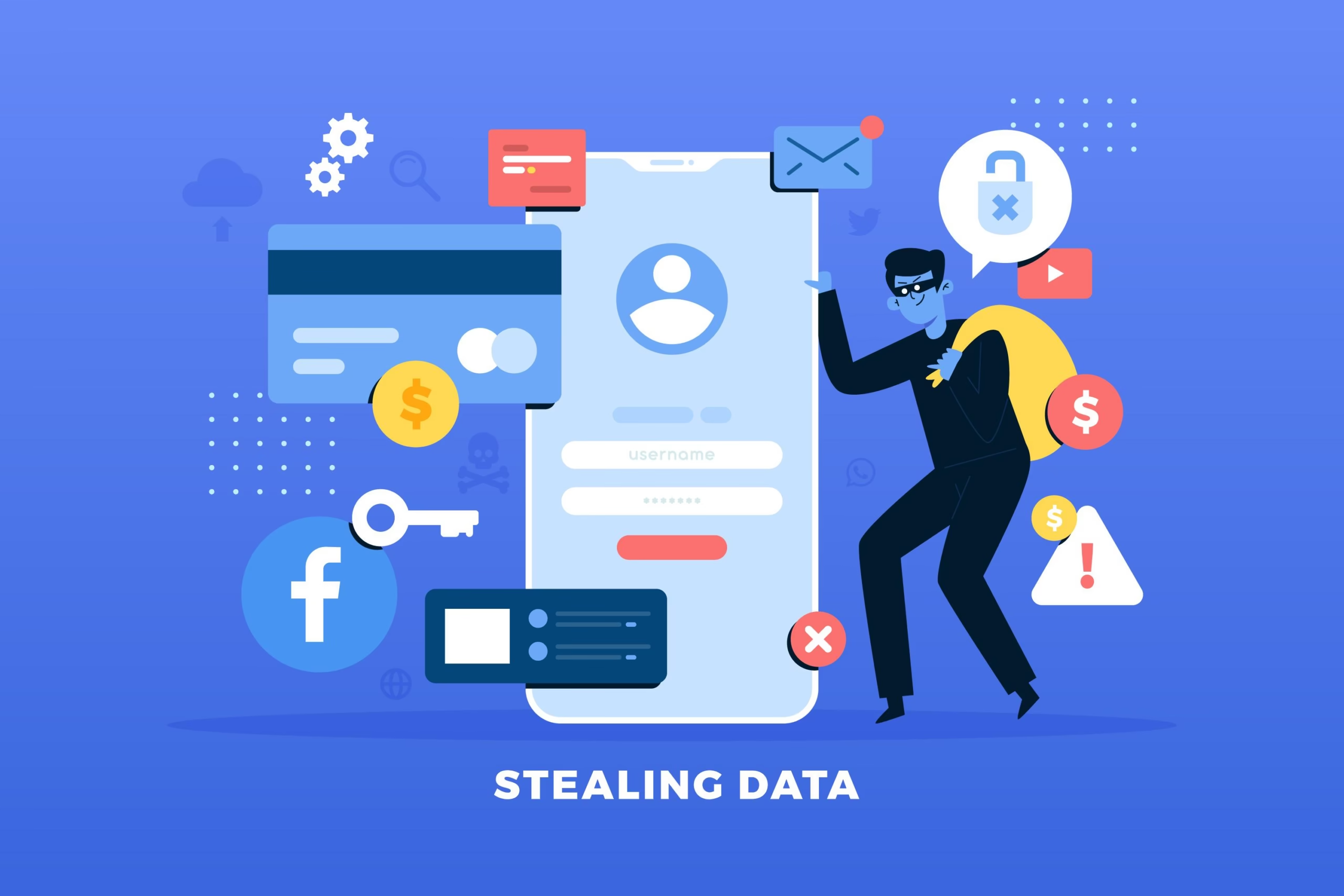

Introduction: Why Personal Data Exposure Is Increasing
Modern digital services have made everyday tasks easier than ever before. From ordering food through mobile apps to controlling home devices with voice assistants, technology now plays a central role in daily life. These smart services provide speed, automation, and convenience that many people rely on every day.
However, this convenience often comes at a cost. Behind the scenes, many digital services continuously collect and process large amounts of personal information. Data about user behavior, location, preferences, and interactions is gathered to personalize experiences and improve functionality.
Although this data collection helps platforms deliver smarter services, it also increases the amount of personal information circulating online. As a result, personal data exposure has become a growing concern for both individuals and organizations.
Understanding how smart services expand personal data exposure is essential for maintaining privacy and reducing cybersecurity risks in today’s digital environment.
What Is Personal Data Exposure?
Personal data exposure occurs when sensitive or identifiable information becomes accessible to unauthorized parties or is shared more widely than intended.
Personal data can include many different types of information, such as:
- names and contact details
- location data
- browsing behavior
- purchase history
- device identifiers
- biometric information
In many cases, this data is collected automatically by digital platforms.
For example, mobile applications may track user activity, websites may store cookies to analyze behavior, and smart devices may record voice commands or environmental data. Over time, these small pieces of information can accumulate into detailed profiles about individuals.
How Smart Services Collect Personal Data
Smart services depend heavily on data to operate effectively. Without access to user information, many of these systems would not be able to provide personalized recommendations or automated functionality.
Step 1: Data Collection Through Applications
Mobile apps and online platforms frequently collect data about user interactions.
This may include:
- search history
- purchase patterns
- in-app activity
- user preferences
Such information helps services tailor recommendations and optimize performance.
Step 2: Device and Sensor Data
Many modern devices contain sensors that collect additional information.
Examples include:
- GPS for location tracking
- cameras and microphones
- motion sensors
- wearable health trackers
These technologies allow smart services to respond to user needs in real time.
Step 3: Data Aggregation
Once data is collected, it is often combined with information from other platforms. Companies may aggregate data from multiple services to build comprehensive user profiles.
For example, browsing behavior, purchase history, and location data may all be combined to create detailed insights about individual preferences.
Step 4: Third-Party Data Sharing
In many cases, digital platforms share collected data with third-party partners. These partners may include advertisers, analytics providers, or cloud service providers.
As a result, personal information may circulate across multiple organizations, increasing the risk of exposure.
Why Personal Data Exposure Is Increasing in 2026
Several technological trends are contributing to the growing volume of personal data collected by smart services.
Expansion of Smart Devices
Internet-connected devices such as smart speakers, fitness trackers, and home automation systems continuously generate data.
These devices often collect behavioral and environmental information to improve automation features.
Growth of Mobile Ecosystems
Mobile apps have become central to everyday life. Users now rely on applications for banking, transportation, shopping, and communication.
Each app may collect different forms of user data.
Cloud-Based Services
Many smart services store user data in cloud environments. While cloud platforms provide scalability and efficiency, they also centralize large amounts of sensitive information.
Data-Driven Personalization
Companies increasingly rely on data analytics to deliver personalized experiences. Recommendation systems, targeted advertising, and predictive services all depend on user data.
Real-World Relevance of Personal Data Exposure
Privacy researchers and digital rights organizations have warned that the rapid expansion of smart technologies is increasing the amount of personal data collected online.
For example, the Electronic Frontier Foundation (EFF) has highlighted how modern digital services gather extensive user data to track behavior and personalize services across multiple platforms. Read more.
As smart technologies continue to evolve, managing personal data exposure will remain a critical challenge for individuals and organizations alike.
Impact of Personal Data Exposure
For Organizations
Organizations must manage personal data responsibly to protect customers and maintain trust.
If personal data becomes exposed or misused, the consequences may include:
- regulatory penalties
- reputational damage
- customer trust loss
- legal liability
- increased cybersecurity risks
Data protection regulations around the world have become stricter as a result of these risks.
For Individuals
Individuals also face several risks when large amounts of personal data are collected and shared.
Potential consequences include:
- identity theft
- targeted phishing attacks
- online tracking and profiling
- financial fraud
- privacy violations
Because data often spreads across multiple platforms, removing it completely can be extremely difficult.
How to Reduce Personal Data Exposure
Although it may not be possible to eliminate data collection entirely, individuals and organizations can reduce the risks associated with personal data exposure.
Review Privacy Settings
Users should regularly review privacy settings on apps and online services to control how their information is shared.
Limit App Permissions
Mobile applications often request access to sensitive device features such as location, contacts, and cameras. Limiting these permissions can reduce unnecessary data collection.
Remove Unused Accounts
Inactive accounts may still store personal data. Deleting unused accounts helps reduce the number of platforms holding personal information.
Use Strong Security Practices
Enabling multi-factor authentication and using strong passwords helps protect accounts from unauthorized access.
Monitor Data Breaches
Users should stay informed about data breaches that may expose their personal information.
Personal Data Exposure vs Data Privacy
Although the two concepts are related, personal data exposure and data privacy are not identical.
Personal data exposure refers to the accessibility and spread of personal information through digital systems.
Data privacy focuses on policies, laws, and security practices that regulate how organizations collect and manage personal data.
In practice, reducing data exposure is a key part of maintaining strong data privacy protections.
Conclusion
Smart services have transformed the way people interact with technology. From personalized recommendations to automated devices, these platforms offer powerful convenience and efficiency.
However, this convenience also relies heavily on collecting and processing large amounts of personal information. As smart technologies continue to expand, so does the risk of personal data exposure.
Organizations and individuals must remain aware of how digital services collect and use data. By implementing stronger privacy controls and security practices, it is possible to reduce exposure while still benefiting from modern technology.
At eSHIELD IT Services, we help organizations understand digital privacy risks and strengthen cybersecurity strategies to protect sensitive data in an increasingly connected world.
FAQ
What is personal data exposure?
Personal data exposure occurs when sensitive personal information becomes accessible to unauthorized individuals or systems.
Why do smart services collect personal data?
Smart services collect data to personalize experiences, improve functionality, and analyze user behavior.
Are smart devices a privacy risk?
Smart devices can increase privacy risks because they continuously collect data about user activities and environments.
How can individuals reduce personal data exposure?
People can reduce exposure by reviewing privacy settings, limiting app permissions, and removing unused accounts.
Is personal data exposure the same as a data breach?
No. A data breach is one cause of data exposure, but exposure can also occur through excessive data sharing or poor privacy controls.
